Complete Duct Cleaning Guide: Signs, Safety, and What to Expect in Alberta
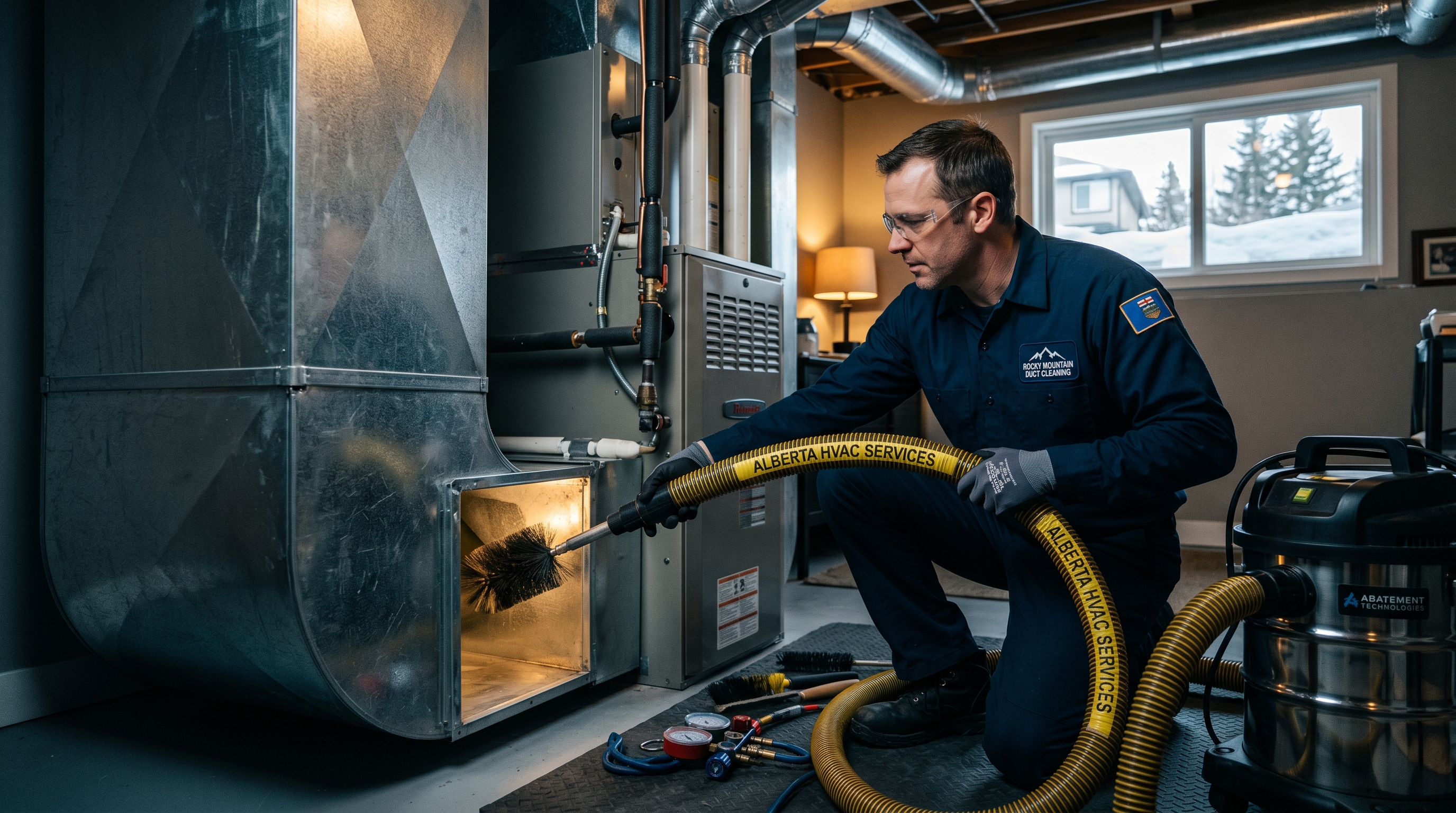
Answer: The most common signs your ducts need cleaning include visible dust puffs from vents when the furnace starts, rapid dust buildup on furniture, musty odours, unexplained allergy symptoms, and uneven heating between rooms. Most Alberta homes need professional duct cleaning every 3-5 years, and dryer vents should be cleaned annually to prevent fires. Flat-rate pricing protects you from per-vent bill shock.
Signs Your Ducts Need Cleaning: The 10 Warning Signs Alberta Homeowners Should Know
There is something quietly affecting the air quality in thousands of homes across Alberta right now, and most homeowners have no idea it is happening. Behind your walls and beneath your floors, a network of ducts carries heated and cooled air to every room in your house. Over time, those ducts accumulate dust, debris, allergens, pet dander, construction particles, and sometimes much worse.
In Alberta, your furnace runs for roughly seven to eight months of the year. That means air is circulating through your ductwork almost constantly during our long prairie winters. Every cycle pushes whatever is inside those ducts directly into the rooms where your family eats, sleeps, and breathes. According to the National Air Duct Cleaners Association (NADCA), the average home generates approximately 40 pounds of dust per year, and a significant portion of that ends up inside your duct system.
The challenge is that dirty ductwork does not always announce itself with a single dramatic symptom. Instead, it shows up as a collection of smaller, easy-to-dismiss signs. Individually, each sign is easy to overlook. Together, they paint a clear picture.
1. Visible Dust Puffs When Your Furnace Starts
If you have ever watched your floor vents when the furnace kicks on and noticed a small cloud of dust billow out, you are witnessing one of the clearest signs that your ductwork is overdue for cleaning. This is not normal. In a home with clean ducts, the air flowing from your vents should be invisible.
Those dust puffs happen because layers of accumulated dust, dirt, and debris have built up on the interior walls of your ductwork. When the blower motor engages and air pressure surges through the system, it dislodges some of that buildup and pushes it into your living space. Alberta's dry climate means dust particles stay airborne longer and settle into ductwork more aggressively than in humid regions.
2. Excessive Dust on Furniture Within Days of Cleaning
If no matter how often you dust, wipe, and vacuum, surfaces in your home collect a visible layer of dust within a day or two, your ductwork is a likely culprit. While some dust accumulation is normal, an unusual rate of buildup, particularly on surfaces near vents, suggests your duct system is actively distributing contaminated air.
Living on the prairies adds a unique dimension — agricultural dust during spring planting and fall harvest, gravel road dust for rural properties, and fine particulate from surrounding farmland all find their way into duct systems.
3. Musty, Stale, or Stuffy Odours From Vents
Persistent musty or stale smells when your furnace runs may mean your ductwork is harbouring mold, mildew, or decomposing organic matter. Alberta's dramatic temperature swings, especially during spring thaw, create conditions where mold and mildew thrive inside ductwork. Pet dander, pollen, and bacteria accumulate and contribute their own odours.
Your sense of smell adapts — you may notice the smell most when returning home after being away for several hours. If guests have commented on stuffiness, take that observation seriously.
4. Unexplained Allergies or Respiratory Issues
If anyone in your household has developed persistent sneezing, congestion, itchy eyes, coughing, or worsening asthma symptoms that seem worse at home than elsewhere, dirty ductwork could be a contributing factor. Health Canada identifies indoor air pollutants — including dust mites, mold spores, and pet dander — as significant triggers for allergies and asthma.
Children and elderly family members are particularly vulnerable. Their respiratory systems are either still developing or have diminished capacity, making them more susceptible to airborne contaminants.
5. Uneven Heating or Cooling Between Rooms
Significant temperature differences between rooms, especially in split-level or bi-level homes common across Alberta, often point to restricted airflow from dirty ductwork. Longer duct runs to upper and lower levels are more susceptible to buildup. The problem compounds as homeowners crank up the thermostat, overheating some rooms while barely improving others.
6. Visible Mold or Moisture Near Vent Registers
Dark spots, discolouration, or fuzzy growth on or around vent registers demands immediate attention. Visible mold near vents suggests conditions inside your ductwork are supporting mold growth, distributing spores throughout your home every time the furnace runs. Health Canada classifies mold exposure as a significant indoor air quality hazard.
7. Recent Home Renovation or Construction
Home renovation generates extraordinary amounts of fine dust. Drywall installation and sanding produces ultra-fine gypsum particles that become airborne regardless of how carefully the work area was sealed. Even brand-new homes contain significant construction debris inside the ductwork — drywall dust, sawdust, insulation fibres, and paint overspray.
8. Ducts Have Never Been Cleaned (or It Has Been 5+ Years)
If you cannot remember the last time your ducts were professionally cleaned, that fact alone qualifies as a warning sign. NADCA recommends professional duct cleaning every three to five years for most homes, and more frequently for homes with pets, allergy sufferers, or recent renovation work.
9. Pest Evidence Near or Inside Ductwork
Droppings, nesting materials, chew marks, or insect casings near vent registers or around your furnace area indicate pests may have entered your ductwork. Rural properties are particularly susceptible during harsh Alberta winters when rodents seek warm shelter. Rodent droppings can carry Hantavirus and other dangerous pathogens.
10. Increased Energy Bills Without Explanation
When dust and debris accumulate inside ductwork, they narrow the passage for airflow. Your furnace blower motor must work harder and run longer, translating directly into higher energy consumption. The U.S. Department of Energy estimates that 25 to 40 percent of energy used for heating and cooling is wasted due to contaminants in HVAC systems.
Health Impacts of Dirty Ductwork
The consequences of ignoring dirty ductwork compound over time. Mild allergy symptoms can progress into chronic sinus issues. Occasional coughing can develop into persistent respiratory irritation. For family members with asthma, the increasing load of dust mites, mold spores, and particulate matter leads to more frequent and severe attacks.
The Canada Mortgage and Housing Corporation (CMHC) recommends maintaining clean HVAC systems as part of their healthy housing guidelines. Indoor air can be 2-5 times more polluted than outdoor air, and your duct system is the primary distribution mechanism for that air.
Dryer Vent Fire Safety: The Hidden Hazard in Your Laundry Room
Most homeowners do not realize their clothes dryer is one of the most dangerous appliances in their home. Every 22 minutes, a dryer fire occurs somewhere in North America. The National Fire Protection Association (NFPA) identifies clogged dryer vents as the leading cause, with over 15,000 dryer-related fires occurring annually.
How Dryer Vent Fires Start
The process is surprisingly simple but deadly:
- Lint accumulates: Even when you clean your lint trap, 25-30% of lint bypasses the trap and enters your vent system
- Airflow restricts: As lint builds up, airflow decreases. Hot, moist air cannot escape efficiently
- Heat builds up: Internal temperatures that should be 60-70°C can spike to 150-200°C in a restricted vent
- Ignition: Lint is extremely flammable. At critical temperatures, spontaneous combustion occurs. Fire spreads through the vent into wall cavities in minutes
Warning Signs Your Dryer Vent Needs Cleaning
- Dramatically longer drying times — If loads that used to dry in 45 minutes now take 60-90+ minutes, restricted airflow is the most likely cause
- Burning smell during operation — Any burning smell is an emergency. Stop using the dryer immediately
- Dryer exterior too hot to touch — Excess heat that cannot escape heats up the dryer itself
- Laundry room feels like a sauna — Excessive heat and humidity indicate poor ventilation
- Lint around the dryer door seal — Lint escaping because it cannot exit through the clogged vent
- Outdoor vent flap does not open — Check while the dryer is running. If the flap barely moves, you have a significant blockage
- Clothes are still damp but hot — Your dryer is producing heat but cannot exhaust moisture
- Musty smell on dried clothes — Moisture is not being removed properly due to poor ventilation
Alberta-Specific Dryer Vent Risks
Alberta homeowners face additional challenges:
- Ice and frost buildup: When -25°C outdoor air meets warm, moist dryer exhaust, ice forms rapidly at the exterior vent, blocking flow completely
- Snow drifts: Prairie winds create deep snow drifts that can bury exterior vents, especially on north-facing walls
- Longer vent runs: Basement laundry rooms common in Alberta often have vents running 15-30+ feet to exterior walls
- Heavier winter laundry loads: Between heavy winter clothing, snow-soaked gear, and kids' outerwear, Alberta families produce significantly more lint in winter
The Financial Cost of Clogged Dryer Vents
Beyond the fire risk, clogged dryer vents waste money:
- Energy waste: Extended drying times can double electricity consumption — $120-$180 per year in unnecessary energy costs
- Appliance damage: Overworked dryers fail sooner. Heating element replacement costs $150-$300, blower motors $200-$400, or a complete replacement at $800-$1,500+
- Clothing damage: Excessive heat degrades fabric, causing premature wear, elastic breakdown, and shrinkage
The Duct Cleaning Process Explained
Understanding what professional duct cleaning involves helps you evaluate providers and set expectations:
- Inspection: Technicians assess your duct system configuration, age, and condition
- Access setup: Inspection ports are cut into the main trunk lines (reputable companies include this in their standard process)
- High-powered vacuum: Commercial-grade vacuum equipment is connected to your duct system, creating negative pressure that pulls debris toward the collection unit
- Agitation: Specialized rotary brushes, air whips, or compressed air tools dislodge stubborn buildup from duct walls
- Furnace components: The blower wheel, heat exchanger, burners, flame sensor, and cabinet are thoroughly cleaned
- Register cleaning: Every supply and return register is removed, cleaned, and reinstalled
- Airflow testing: System is tested to verify proper airflow after cleaning
A legitimate full-home furnace and duct cleaning takes 2 to 3 hours. If a company tells you they can do it in under an hour, the cleaning will not be thorough.
Flat Rate vs. Per-Vent Pricing: How to Avoid Bill Shock
When shopping for duct cleaning in Alberta, you will encounter two very different pricing models. Understanding the difference is essential before you pick up the phone — because the pricing method determines whether the quote you receive matches the bill you pay.
How Per-Vent Pricing Works
Per-vent companies advertise a low base price — typically $99-$149 — that covers the "system" cleaning. Then they charge an additional fee for each vent (register) in your home, usually $15-$25 per vent.
The catch is that most homeowners do not know how many vents they have until the technician counts them on-site. A typical Alberta home has 15-20 supply and return vents:
- Base price (advertised): $129
- 16 supply vents at $18 each: $288
- 4 return vents at $18 each: $72
- Final bill: $489 — nearly 4x the advertised price
A larger home with 25-30 vents can cost $600-$700+. And that is before any upsells for sanitizing, deodorizing, or "deep cleaning" surcharges.
How Flat-Rate Pricing Works
Flat-rate duct cleaning is one price for your entire home, regardless of the number of vents, the size of your duct system, or any other variable. You are quoted a price on the phone, and that is what you pay — no math required, no surprises.
A proper flat rate covers the complete furnace cleaning (burners, blower wheel, heat exchanger inspection, flame sensor, ignitor, cabinet), all supply and return duct cleaning throughout the home, every register and grille, and the hot water tank area.
Common Upsells to Watch For
NADCA's consumer guidelines flag these common upsells:
- "Sanitizing" or "deodorizing": An extra $100-$200 for spraying chemicals into ducts. Usually unnecessary with thorough mechanical cleaning
- "Deep cleaning" surcharge: A vague upcharge for ducts that are "dirtier than expected"
- Furnace cleaning as a separate charge: Some companies clean only the ducts at their base rate
- "Access port" charges: Charging to cut access holes in ductwork — reputable companies include this
How Often Should You Clean Your Ducts?
The general recommendations for Alberta homes:
- Standard homes: Every 3-5 years
- Homes with pets: Every 2-3 years
- Allergy or asthma sufferers: Every 2-3 years
- After renovation: Immediately upon completion
- New construction: Before moving in or within the first year
- Rural or gravel road properties: Every 2-3 years
- Dryer vents: Annually (every 6 months for large families or long vent runs)
Choosing a Duct Cleaning Provider in Alberta
Before committing to any duct cleaning company, get clear answers to these questions:
- Is your quoted price all-in for every vent in my home? — The single most important question
- Does the price include furnace cleaning? — Some companies treat this as a separate service
- Are there any per-vent charges? — Ask explicitly, even if the company uses the term "flat rate"
- Are there any circumstances where the price would change? — Ask about dirty duct surcharges or access fees
- How long will the appointment take? — Legitimate cleaning takes 2-3 hours
- Are your technicians NADCA certified? — The industry standard for professional duct cleaning
- How long have you been in business? — Established companies with reviews are safer choices
If a company cannot answer these questions directly and confidently, that is a red flag.
Special Considerations for Alberta Homes
Alberta's unique climate and housing stock create specific duct cleaning considerations that homeowners in other provinces do not face.
Extended Heating Season
With furnaces running seven to eight months of the year, Alberta homes accumulate duct contamination faster than homes in milder climates. A home in Vancouver or Toronto might reasonably stretch duct cleaning intervals to five or even seven years. In Alberta, the three-to-five-year guideline is the upper limit, and many homes benefit from more frequent cleaning.
Prairie Dust and Rural Properties
Homes near agricultural land, gravel roads, or in rural areas face significantly higher dust infiltration. Prevailing westerly winds carry fine particulate matter from surrounding farmland directly into residential areas. During spring planting and fall harvest, airborne dust levels spike dramatically. Rural acreage homes are particularly affected and may need professional duct cleaning every two to three years rather than the standard three-to-five-year interval.
Home Styles Common in Alberta
Many Alberta communities feature split-level and bi-level homes built during the 1970s through the 1990s. These home styles rely on longer duct runs to reach upper and lower levels, making them more susceptible to buildup that restricts airflow. Older homes in established neighbourhoods may have ductwork that has never been professionally cleaned since the house was built — sometimes five or six decades of accumulated debris.
Temperature Extremes and Condensation
Alberta's dramatic temperature swings, especially during the shoulder seasons of spring and fall, create condensation inside duct systems as warm interior air meets cold duct surfaces. Homes with basement living areas are especially prone, as underground ductwork runs through cooler environments where condensation forms more readily. This moisture can support mold growth if ducts are not properly maintained.
DIY Maintenance Between Professional Cleanings
While professional cleaning is essential on a regular schedule, there are several things Alberta homeowners can do between appointments to maintain better air quality:
Furnace Filter Management
Check your furnace filter monthly, especially during peak heating season (November through March). Replace it every one to three months depending on filter type, pet ownership, and household activity. High-efficiency filters (MERV 8-12) offer better filtration but may require more frequent changes. Always note the size and MERV rating before purchasing a replacement.
Vent Register Cleaning
Remove floor and wall registers quarterly, vacuum visible dust from inside the duct opening (as far as your vacuum hose reaches), and wash the registers with warm soapy water. This simple task reduces the amount of surface dust being blown into your living space each time the furnace cycles.
Monitor Your System
Pay attention to changes in your HVAC system's behaviour. Note when dust accumulation seems to increase, when rooms become harder to heat, or when the furnace seems to run longer cycles than usual. These gradual changes are easy to miss day-to-day but become obvious when you are actively watching for them.
Dryer Vent DIY Maintenance
Clean the lint trap before or after every single dryer load — this is non-negotiable. Monthly, wash the lint screen with soap and hot water to remove invisible film left by fabric softener sheets. Pull the dryer away from the wall quarterly and vacuum behind and underneath it. Check the exterior vent monthly to ensure the flap opens freely and no snow, ice, bird nests, or debris are blocking it. In Alberta winters, check weekly during cold snaps below -20°C.
What DIY Cannot Do
Household vacuums cannot reach the full length of your ductwork or generate enough suction to remove compacted debris from 15-30 foot duct runs. Flexible brush kits from hardware stores, if used incorrectly, can push lint deeper into the system rather than removing it. Professional equipment — commercial-grade rotary brush systems and truck-mounted vacuums — is necessary for thorough cleaning that actually removes contaminants rather than redistributing them.
Frequently Asked Questions
How much does duct cleaning cost in Alberta?
Costs vary by provider and pricing model. Per-vent companies may advertise $99-$149 but the final bill typically ranges from $400-$700 for a standard home. Flat-rate providers charge a single price — typically $300-$450 — that covers the entire home regardless of vent count. Always ask for an all-in price before booking.
Can dirty ducts make my family sick?
Yes. Dirty ductwork circulates dust mites, mold spores, pet dander, bacteria, and other contaminants throughout your home every time the furnace runs. This can trigger or worsen allergies, asthma, sinus congestion, headaches, and other respiratory issues, especially in children and the elderly.
Does duct cleaning help with energy bills?
Yes. When ducts are clogged with dust and debris, your furnace works harder to push air through the system, consuming more energy. Clean ductwork allows for better airflow, which can reduce energy consumption and lower heating bills during Alberta's long winters.
Should I get duct cleaning after a home renovation?
Absolutely. Home renovations generate enormous amounts of fine dust, including drywall dust, sawdust, and paint particles. Even when contractors contain the work area, fine particles enter the duct system and circulate throughout your home for months until professionally removed.
What is the difference between duct cleaning and furnace maintenance?
Duct cleaning involves physically removing dust, debris, and contaminants from your ductwork and furnace interior using specialized vacuum and agitation equipment. Furnace maintenance involves mechanical inspections, tune-ups, and part replacements. Both are important for a healthy, efficient HVAC system.
How often should I get my dryer vent cleaned?
Annual professional dryer vent cleaning is recommended for most homes. Households doing more than 5-6 loads of laundry per week, homes with pets, or properties with vent runs longer than 20 feet should clean every 6-8 months. If you notice any warning signs (burning smell, longer drying times, hot dryer exterior), schedule service immediately.
Can I clean my dryer vent myself?
Basic DIY maintenance — cleaning the lint trap, vacuuming behind the dryer, clearing the exterior vent — is essential and should be done regularly. However, professional cleaning with commercial-grade rotary brush systems and high-powered vacuums is necessary at least annually to address the full vent run, especially for Alberta homes with long vent runs and complex configurations.
Do I need duct cleaning if my house is brand new?
Yes, and it is arguably even more important. New construction leaves behind significant amounts of drywall dust, sawdust, insulation fibres, and other construction debris inside the ductwork. Many new homeowners are surprised by how much debris is pulled from their brand-new ducts.
Take Action: Protect Your Home and Family
Your duct system is the respiratory system of your home. Every breath your family takes indoors contains air that has passed through those ducts. Regular professional cleaning is not a luxury — it is a health consideration and an investment that pays for itself through improved air quality, lower energy bills, and extended HVAC system life.
If you noticed two or more of the warning signs described in this guide, or if it has been more than 3-5 years since your last professional cleaning, schedule an appointment today. And do not forget your dryer vent — annual cleaning is your best defence against a preventable house fire.
Contact us to learn more about HVAC maintenance marketing for your business, or visit our SEO services page to see how we help home service companies dominate their local market.
Related reading
- The Complete Guide to AI Marketing for Alberta Small Businesses in 2026
- The Complete Electrician Marketing Guide: Digital Strategies That Generate Leads in Alberta
- Measuring AI Marketing ROI: How Alberta Small Businesses Track Real Results
- AI-Powered Web Design for Alberta Small Businesses: Convert Visitors Into Customers
Sources & further reading
Ready to put this into action? Explore AI Precision Marketing's paid advertising services for Stony Plain, Spruce Grove, and Edmonton businesses.