Alberta SMEs Are Filling Their Sales Pipeline on Autopilot. Here's How.
From Stony Plain to Edmonton, small businesses are replacing hours of manual prospecting with AI systems that research, qualify, and reach out to ideal clients around the clock. This is the practical guide to doing it right.
AI prospecting is the use of machine learning and real-time signal detection to automatically identify ideal potential customers, prioritize them based on buying intent, and personalize outreach at scale. It replaces manual research and cold-contact guesswork, cutting per-contact research time from 20-30 minutes to seconds while improving conversation quality and booked meeting rates.
Why Manual Prospecting Is Quietly Killing Small Sales Teams in Alberta
Most small business owners in Stony Plain and Spruce Grove didn't start their company to spend their Tuesday afternoons hunting through LinkedIn for contact emails. But that's exactly what happens. A salesperson on a small team typically burns 20 to 30 minutes researching a single prospect before they ever write the first word of an outreach message. Multiply that across a week and you've got 10 to 15 hours of your team's best energy going into data collection, not selling.
Here's the honest problem: most Alberta SMEs that try AI prospecting start in the wrong place. They buy a tool that sends more emails faster and call it done. The volume goes up. The results don't. That's because they automated the wrong thing.
The shift happening right now in 2026 isn't about doing more outreach. It's about doing smarter outreach. The businesses winning in Edmonton's competitive B2B market are the ones using AI to understand buying signals first, then crafting outreach anchored to what's actually happening at the target account. That's a fundamentally different approach, and it produces fundamentally different results.
Think about it this way: imagine a local Spruce Grove HVAC contractor trying to reach property managers. The manual approach means cold calls to a list, most of which are outdated. The AI-assisted approach means the system flags a property manager who just posted a job listing for a facilities coordinator, cross-references their company size, checks whether they manage commercial properties over a certain square footage, and then drafts a personalized message referencing a challenge that's likely top of mind right now. That's not science fiction. That's what modern AI prospecting tools do.
What Does an Actual AI Prospecting System Look Like for a Small Business?
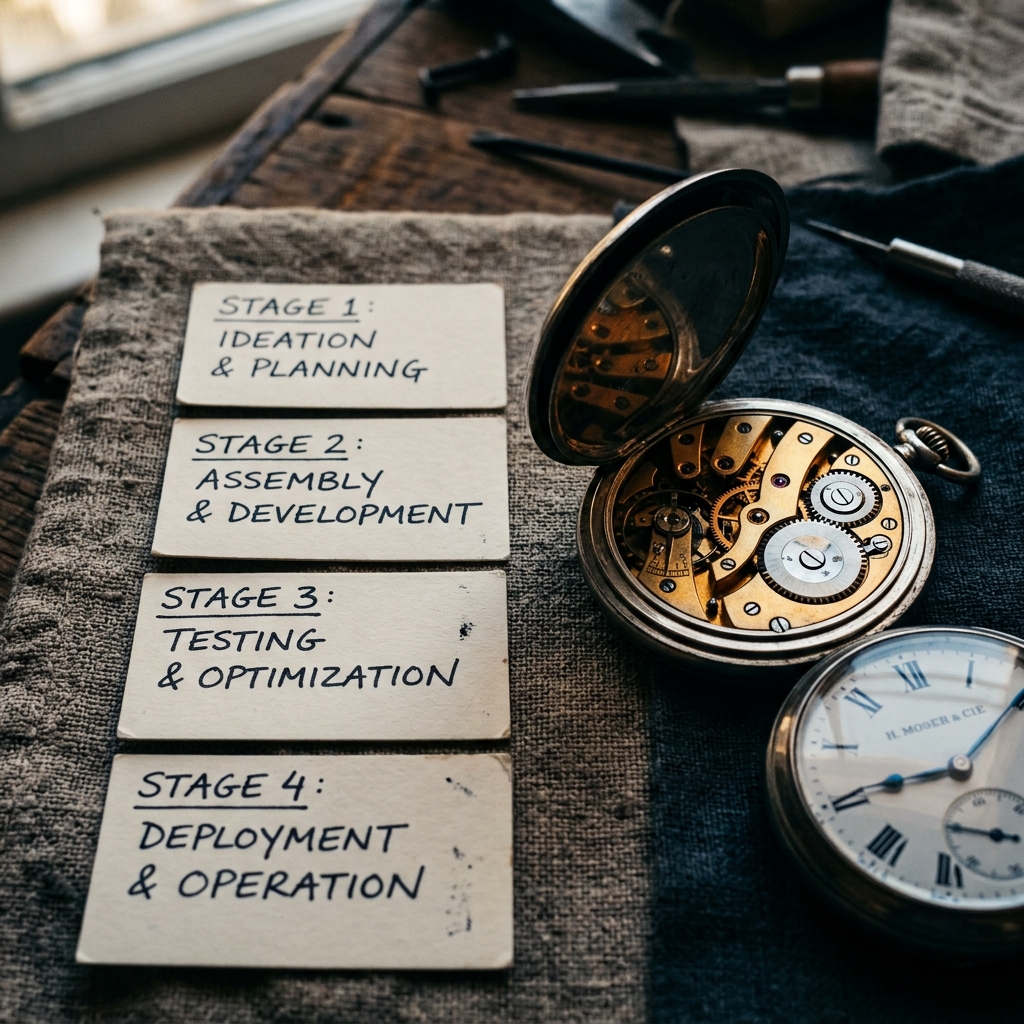
A working AI prospecting setup for an Alberta SME doesn't require a data science team or a six-figure software budget. It has four moving parts that work together.
1. A Signal Source. Tools like Apollo.io, Clay, or Cognism pull real-time data signals: job changes, funding announcements, new office openings, hiring patterns. These signals tell you which companies are likely in a buying moment right now, not six months ago.
2. An Enrichment Layer. Once a prospect is identified, AI fills in the gaps automatically. Company size, decision-maker contact info, recent news, tech stack, revenue estimates. What used to take 20 minutes per contact takes seconds.
3. A Personalization Engine. This is where most businesses shortcut themselves and pay for it later. The AI doesn't just slot a first name into a template. It drafts outreach that references a specific trigger relevant to that prospect. A commercial real estate firm in Edmonton that just expanded to a second location gets a different message than one that's been stable for three years.
4. A Human Review Step. Yes, even in an automated system. The best setups keep a human in the loop for final approval before anything goes out. This isn't a bottleneck. It's the filter that keeps your brand's voice intact and catches anything that would feel off to a real person.
Tools like HubSpot's AI-powered CRM now bundle predictive lead scoring, automated follow-up sequences, and meeting summaries into one platform many Alberta businesses already use. The infrastructure barrier to entry in 2026 is lower than it's ever been.
The Alberta businesses I talk to aren't short on ambition. They're short on hours. AI prospecting doesn't replace your sales team. It gives them back the part of their week that was being eaten by spreadsheets and stale contact lists, so they can spend it actually talking to people who want to buy., Eric Wick, AI Consultant & Founder at AI Precision Marketing

How to Measure Whether Your AI Prospecting Is Actually Working (Not Just Busy)
This is the question most Alberta SMEs skip, and it's the most important one. Activity metrics like emails sent, contacts added, and outreach sequences launched don't tell you if your pipeline is actually healthier. They just tell you the machine is running.
Here are the numbers that actually matter:
Connect Rate. Of all the outreach your AI system sends, what percentage results in a real reply or a real conversation? If your connect rate isn't improving alongside your volume, you're automating noise.
Conversation Quality Score. This one's harder to measure but worth tracking. Keep a simple log: after each first call or reply, rate on a 1-5 scale how relevant the prospect was to what you actually sell. Over time, a working AI prospecting setup should push this number up.
Pipeline-to-Close Rate. Are the meetings you're booking converting at the same rate as your manually-sourced leads, or better? If AI-sourced leads are closing at a lower rate, your targeting criteria need tightening.
Time-to-First-Meeting. How many days from first contact to first booked meeting? AI prospecting should compress this window significantly for warm, intent-based leads.
For a Stony Plain-based trades business or an Edmonton professional services firm, realistic benchmarks after 90 days of a properly configured AI system: connect rates up 20 to 35%, time-to-first-meeting down by roughly half, and your sales reps spending the majority of their selling hours in conversations rather than research.
The caveat: none of this works if your targeting is wrong from the start. Garbage inputs produce garbage outputs no matter how sophisticated the AI. Define your ideal customer profile tightly before you touch any tool.
The 3 Biggest Mistakes Alberta SMEs Make When Starting AI Prospecting
Spent any time talking to business owners in Edmonton or Spruce Grove who tried an AI prospecting tool and gave up? The stories are almost always the same. Here's where things go wrong.
Mistake 1: Buying the tool before defining the target. AI prospecting amplifies whatever targeting you feed it. If you don't know specifically who you're going after (industry, company size, geography, buying trigger), the system will find you a lot of people who match a vague description and convert almost none of them. Spend a week building your ideal customer profile before you open any software.
Mistake 2: Treating personalization as optional. The research is clear on this. Blasting a high volume of generic messages is what gives AI prospecting a bad reputation. Semir Jahic, CEO of Salesmotion, puts it plainly: most AI prospecting tools automate the wrong thing faster. They help you send more emails, not better ones. The fix is building signal-triggered personalization into every outreach sequence from day one.
Mistake 3: No human review step. Automation without oversight produces embarrassing moments. An AI that flags a company as a high-intent prospect because they recently posted a job listing, without checking whether that company is actually in your service area or price range, will waste real sales conversations. Build in a 15-minute daily review and your system will be dramatically more effective.
The Alberta businesses getting this right in 2026 are the ones treating AI as a research and prioritization engine first, and a sending tool second. That mental shift changes everything.

How Much Time Could AI Prospecting Save Your Sales Team?
How Much Time Could AI Prospecting Save Your Sales Team?
Frequently Asked Questions
What's the difference between AI prospecting and just using a contact database?
A contact database gives you a list. AI prospecting gives you a prioritized, signal-filtered shortlist of the right people at the right time, with personalized outreach drafted automatically. The database tells you who exists. AI prospecting tells you who is likely ready to buy right now and gives you a reason to reach out that's actually relevant to them.
How much does AI prospecting cost for a small business in Edmonton or Stony Plain?
Entry-level AI prospecting setups using tools like Apollo.io start around $50 to $100 CAD per month. More comprehensive setups combining enrichment, CRM integration, and AI outreach personalization typically run $300 to $800 per month for a small team. The ROI question is whether recovering 4 to 7 hours per sales rep per week justifies that spend. For most Alberta SMEs, it does within the first 60 days.
Does my business need a CRM before starting with AI prospecting?
A CRM helps significantly, but it's not a hard requirement to start. Some AI prospecting tools work as standalone systems and can export leads to a spreadsheet or basic contact manager. That said, if you're serious about scaling your pipeline, connecting your AI prospecting system to a CRM like HubSpot from day one gives you much better data on what's working and reduces manual hand-offs.
How do I make sure AI prospecting outreach doesn't feel robotic or impersonal?
The key is signal-triggered personalization, not template personalization. Instead of inserting a first name into a generic message, your AI should reference something specific happening at the prospect's company right now, a recent hire, an expansion, a challenge tied to their industry this quarter. Pair that with a human review step before sending, and the outreach reads as research-backed, not automated.
Is AI prospecting only for B2B businesses, or can Alberta B2C companies use it too?
Most AI prospecting tools are built for B2B, where you're targeting specific companies and decision-makers. B2C businesses in Alberta, like local service providers in Spruce Grove or retail operations in Edmonton, typically get more value from AI in paid ad targeting, automated follow-up sequences for inbound leads, and AI-assisted reputation management rather than outbound AI prospecting.
Want Results Like These?
AI Precision Marketing works with small and medium businesses across Stony Plain, Spruce Grove, and Edmonton to build AI prospecting systems that actually produce booked meetings, not just activity reports. If your pipeline feels like it depends too much on who had time to make calls this week, let's fix that. Book a free 30-minute consultation and we'll show you exactly what a working AI prospecting setup looks like for your specific business.
Schedule a Free ConsultationReady to put this into action? Explore AI Precision Marketing's paid advertising services for Stony Plain, Spruce Grove, and Edmonton businesses.
Related reading
- AI Lead Generation: Automate Your Pipeline in Stony Plain & Spruce Grove
- Spruce Grove Marketing: Your 2026 AI Playbook for Local Business Growth (Alberta Entrepreneurs, Pay Attention)
- AI Marketing Stack 2026: Essential Martech AI Tools for Stony Plain & Spruce Grove Businesses
- How AI-Powered Marketing is Transforming Businesses in Spruce Grove, Edmonton, and Across Alberta